Why model human hearing with neural networks now?
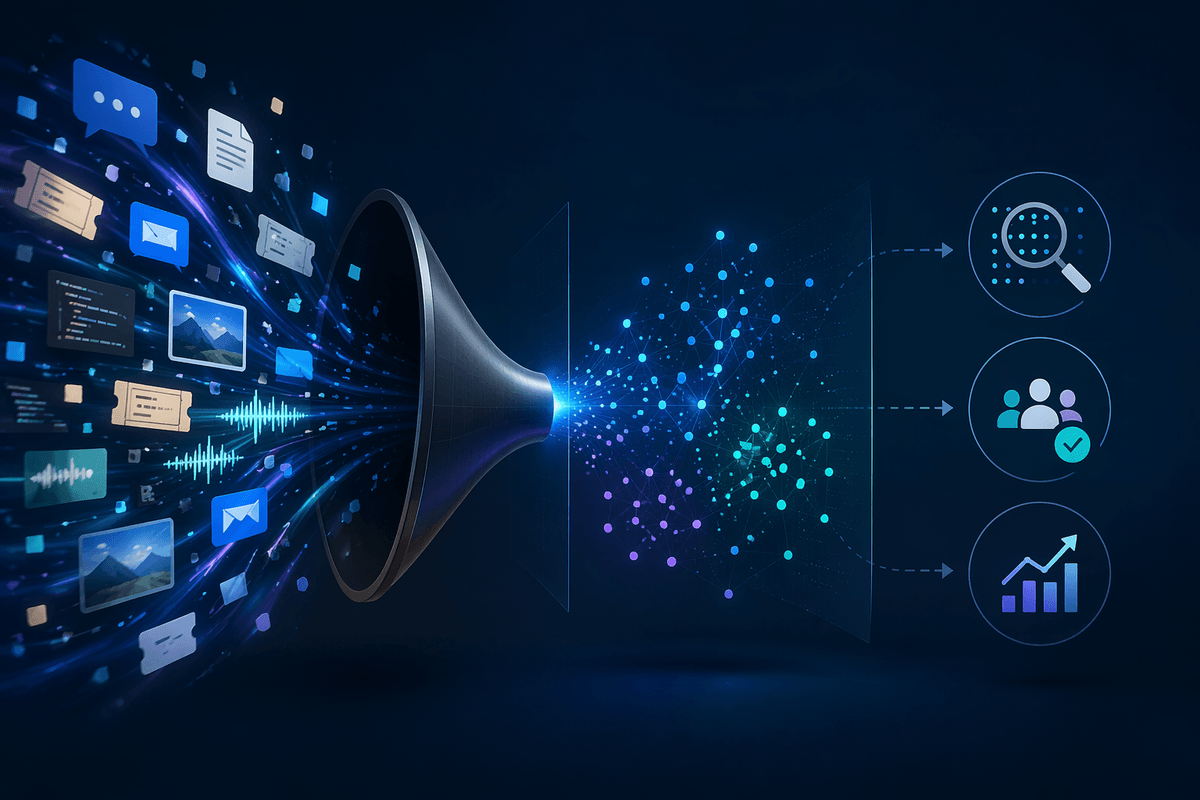
Audio models used to be built around hand-tuned rules: filters that approximate the ear, plus task-specific heuristics. That worked for narrow problems, but it often broke when the audio changed—new microphones, accents, background noise, or playback levels. Neural networks now make it practical to learn those regularities directly from large, varied datasets, and to compare the learned behavior against human perception rather than just task accuracy.
The appeal is not that a network “becomes an ear,” but that it can reproduce measurable patterns people show: which sounds mask others, how intelligibility drops with certain distortions, or why some compressions are inaudible. This matters for speech tech, hearing-aid tuning, audio codecs, and perceptual tests. Collecting the right data and validating human-likeness can be slower and more expensive than training for accuracy alone.
What counts as a "human hearing pattern" in practice
In practice, a “human hearing pattern” is a repeatable behavioral curve or threshold that shows up across listeners, not a vague resemblance to audio. Classic examples are masking (a loud tone making a nearby tone hard to hear), frequency selectivity (some distortions are obvious in one band and invisible in another), and loudness growth (a small level change can feel big at low volumes and minor at high volumes). Speech adds richer patterns: which consonants get confused in noise, how intelligibility changes with reverberation, and how much time-frequency “damage” people can tolerate before words fall apart.
For models, the claim is strongest when you can predict these outcomes without retraining for each test: match human detection thresholds, confusion matrices, or preference rankings from the model’s internal distances or outputs. The practical limitation is variability—hearing loss, age, and context shift the curves—so “human-like” usually means “average, normal-hearing adults under specific lab conditions,” unless the data explicitly covers more.
Choosing the sound representation: waveform, spectrogram, or cochleagram
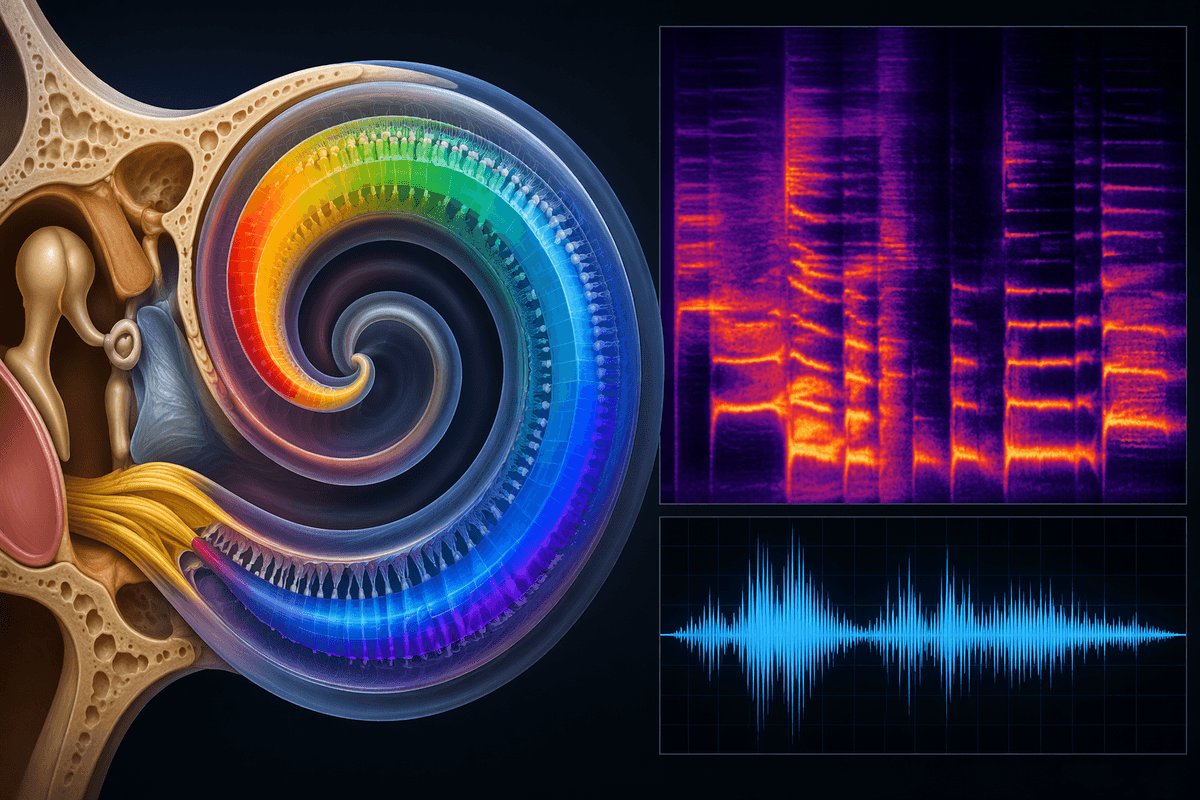
A familiar choice shows up early: do you feed the model raw audio, or a picture-like time–frequency representation? Waveforms keep everything, including phase and fine timing cues that matter for localization and pitch. They also force the network to learn basic filterbank behavior from scratch, which can work but often needs more data and compute, and can be sensitive to sample rate and recording quirks.
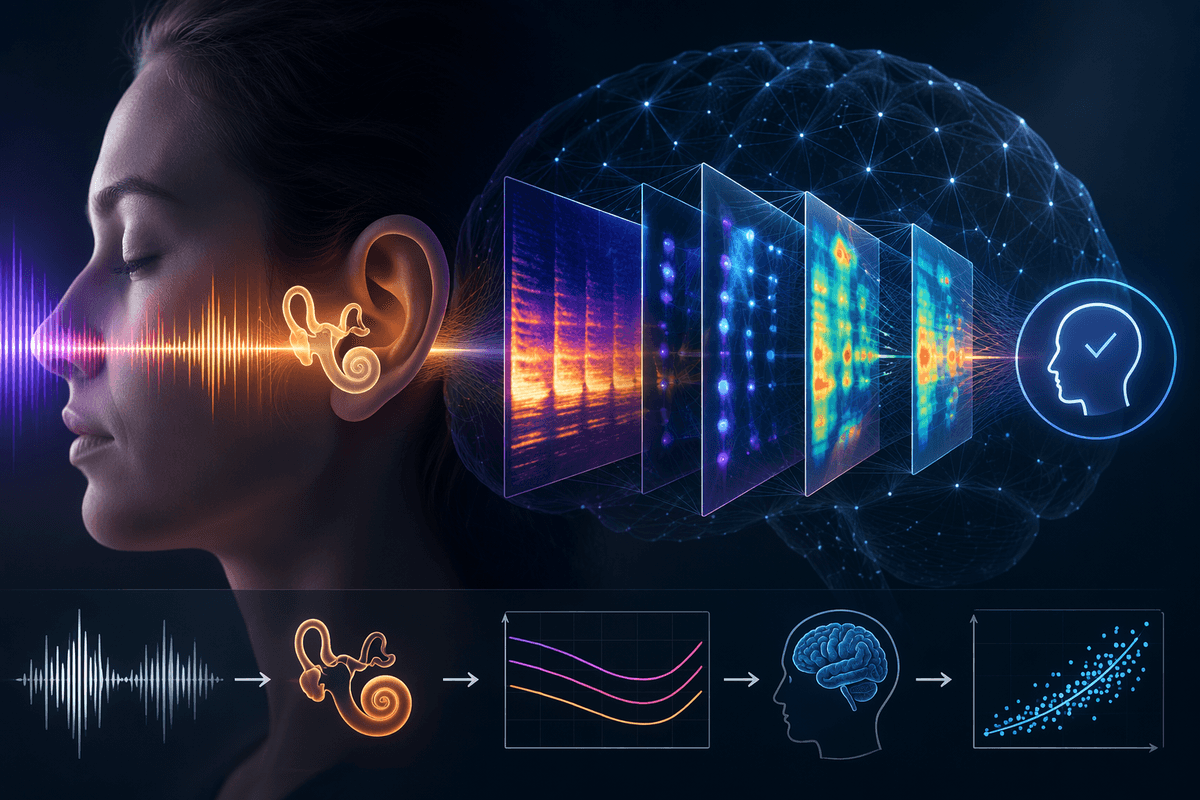
Spectrograms (often mel spectrograms) bake in a coarse version of how hearing groups energy by frequency, making training easier and more stable for speech tasks. The trade-off is that common settings discard phase and flatten some nonlinear effects of the ear. Cochleagrams go further by mimicking cochlear filtering and compression, which can make masking-like behavior easier to recover from internal activations. The cochleagram parameters are assumptions about “the” ear, and they may be wrong for your listeners or device conditions.
Network designs that mimic the auditory pathway (and those that don't)
A common temptation is to call any audio CNN “auditory” because it takes a spectrogram. The closer mimic starts with structure: a front end that behaves like overlapping cochlear channels, followed by stages that build tolerance over time (integration windows) and across frequency (pooling) in a way that resembles how masking and modulation sensitivity emerge. You also see small, local receptive fields early on, with increasing context later—useful when you want the model’s intermediate layers to line up with peripheral-to-central processing.
Designs that don’t mimic hearing can still score well on a task: very deep models that immediately mix all frequencies, aggressive attention that jumps across time, or architectures tuned for invariance that humans don’t have (for example, treating small pitch shifts as “the same” in a way that breaks music perception). Adding biological “priors” can cap raw accuracy and increase latency, which matters for hearing aids and real-time speech systems.
Data and training setups that actually teach perception
Plenty of audio models are trained on labels like “word,” “speaker,” or “event,” then retrofitted as “perceptual” because their embeddings correlate with a human judgment set. That can work, but it often teaches shortcuts: microphone signatures, dataset-specific noise, or cues people ignore. If the goal is human-like hearing, the training signal has to reflect what listeners can or can’t tell apart.
Practically, that means contrastive or metric learning on paired clips where the “same” relationship is defined by perception: a clean signal and a version with an imperceptible codec change should be pulled together, while a barely-audible artifact should be pushed away. It also means mixing conditions that humans generalize across—level changes, room reverb, competing talkers—without letting the model key on a single nuisance factor. Collecting reliable thresholds and preference labels is slow, and synthetic distortions can miss the failures real devices create.
Testing human-likeness: from masking curves to brain alignment
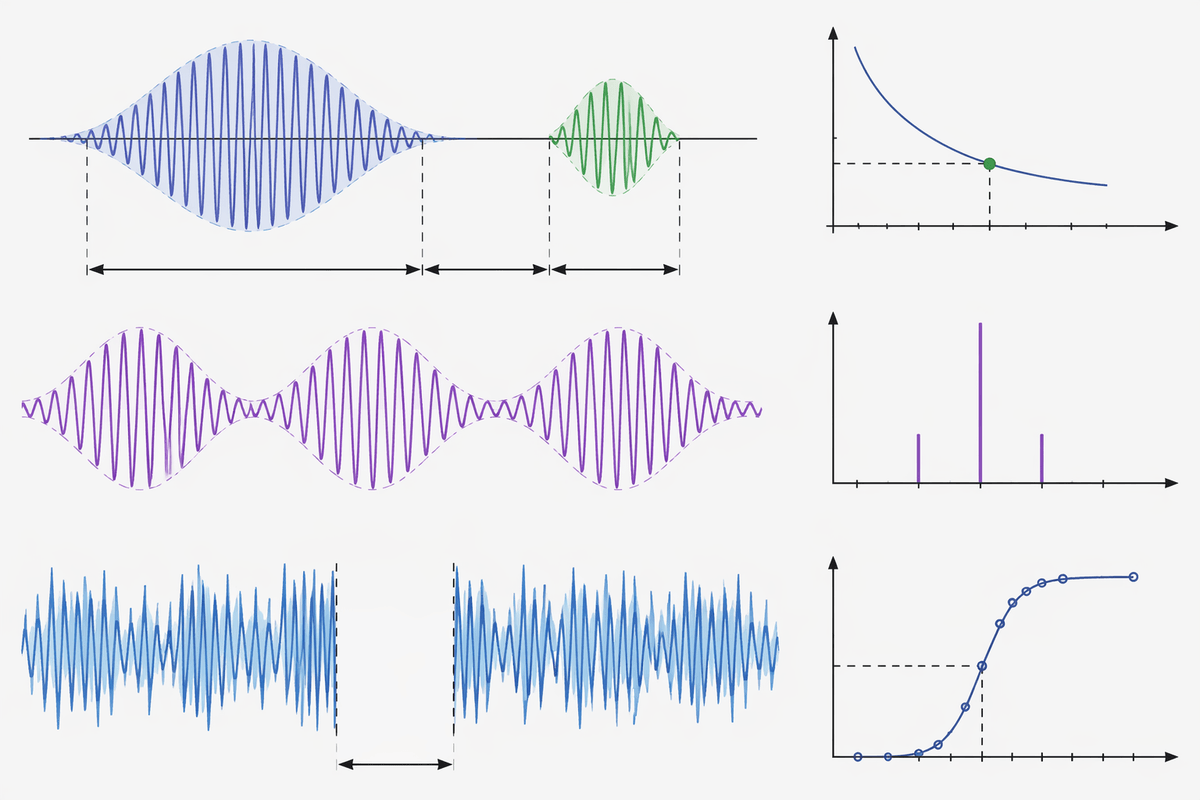
A model that “sounds human” on demos can still fail basic psychophysics. One practical check is whether it predicts masking curves: if you add a masker tone or noise band, does the model’s detectability metric shift thresholds by about the right amount across frequency and level? Similar tests probe temporal effects—forward masking, modulation sensitivity, or how much a brief drop-out matters. The key is using the model as-is: the same embedding distance or decision score should explain many classic curves, not just the one you tuned for.
Stronger evidence comes from alignment with neural data. You can ask whether intermediate layers best predict responses in auditory cortex (for example, via linear readouts), and whether earlier layers match more peripheral properties. This is informative but not cheap: brain datasets are limited, stimulus sets can be narrow, and “good alignment” can reflect shared statistics rather than shared mechanisms. A useful rule is to trust convergence across behavioral tests, not a single headline correlation.
Where these models are useful—and where they mislead
Product teams get real value from human-like hearing models when the goal is perception-aware decisions: choosing codec settings that stay below audibility, ranking noise suppressors by likely listener preference, or stress-testing speech systems with distortions that predict intelligibility drops. They also help in hearing-aid and earbuds tuning, where you care about trade-offs like “less noise” versus “more artifacts” without running a full listening panel for every iteration.
They mislead when “human-like” is treated as universal. Most models reflect average lab listeners, not children, older adults, or specific hearing losses, and they often miss spatial hearing cues, attention, and long-term adaptation. A high embedding similarity can also hide failure modes: a model may treat two clips as close while listeners fixate on a brief, annoying chirp. Running a small targeted listening test still matters, and it costs time.
A practical checklist for building human-like hearing models
You can sanity-check a “human-like hearing” model with a short checklist. Start by naming the listener and context: normal-hearing adults in quiet, or a specific device and noise profile. Choose a representation that matches the cues you care about (timing, masking, loudness), then pick an architecture whose early layers behave like band-limited channels rather than immediately mixing everything. Train with perceptual supervision (paired “same/different” by audibility), not just task labels. Evaluate on multiple psychophysics curves plus a small human listening spot-check. Budget for iteration: collecting reliable judgments and running latency-friendly models both cost time.