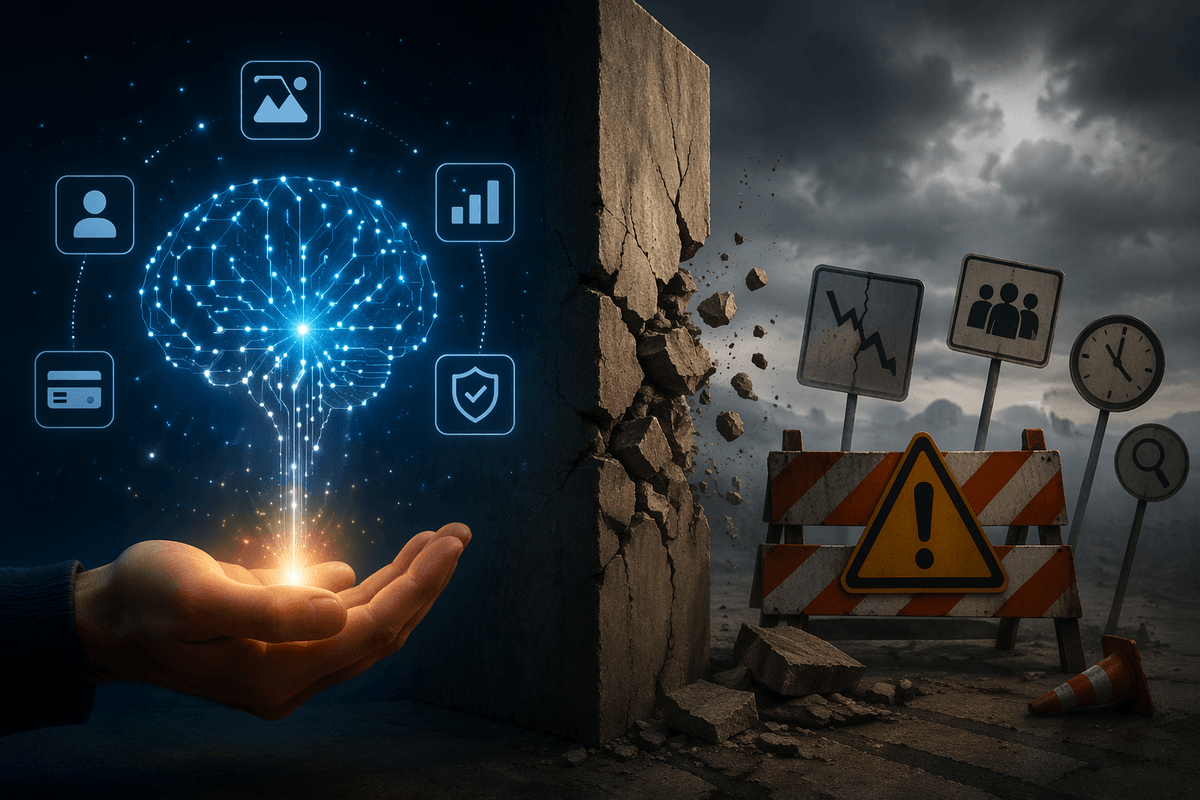
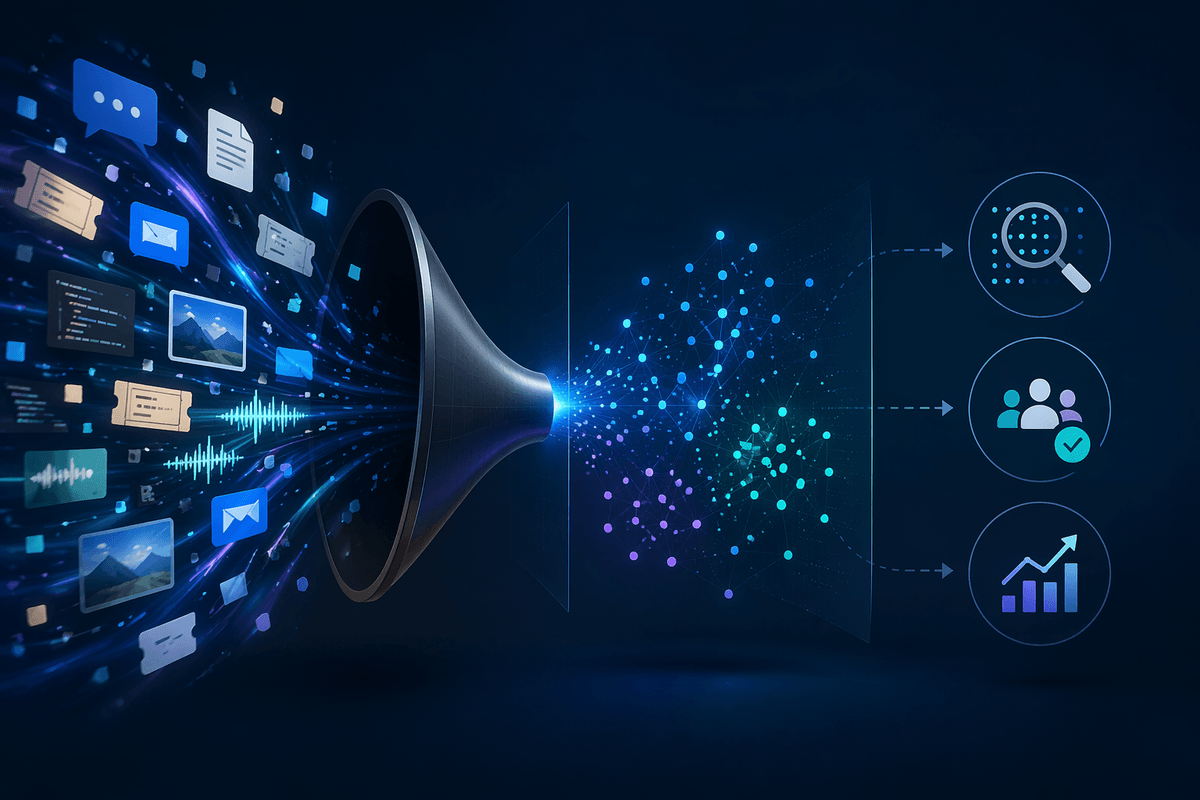
If you want to understand deep learning, you’ve gotta stop thinking about "smart" computers. Think of a massive, multi-layered filter that eats numbers and spits out guesses. That’s all it is. We call it "deep" because we stack dozens—sometimes hundreds—of these mathematical filters on top of each other. It’s the brute force approach to solving problems that are too messy for a human to write code for.
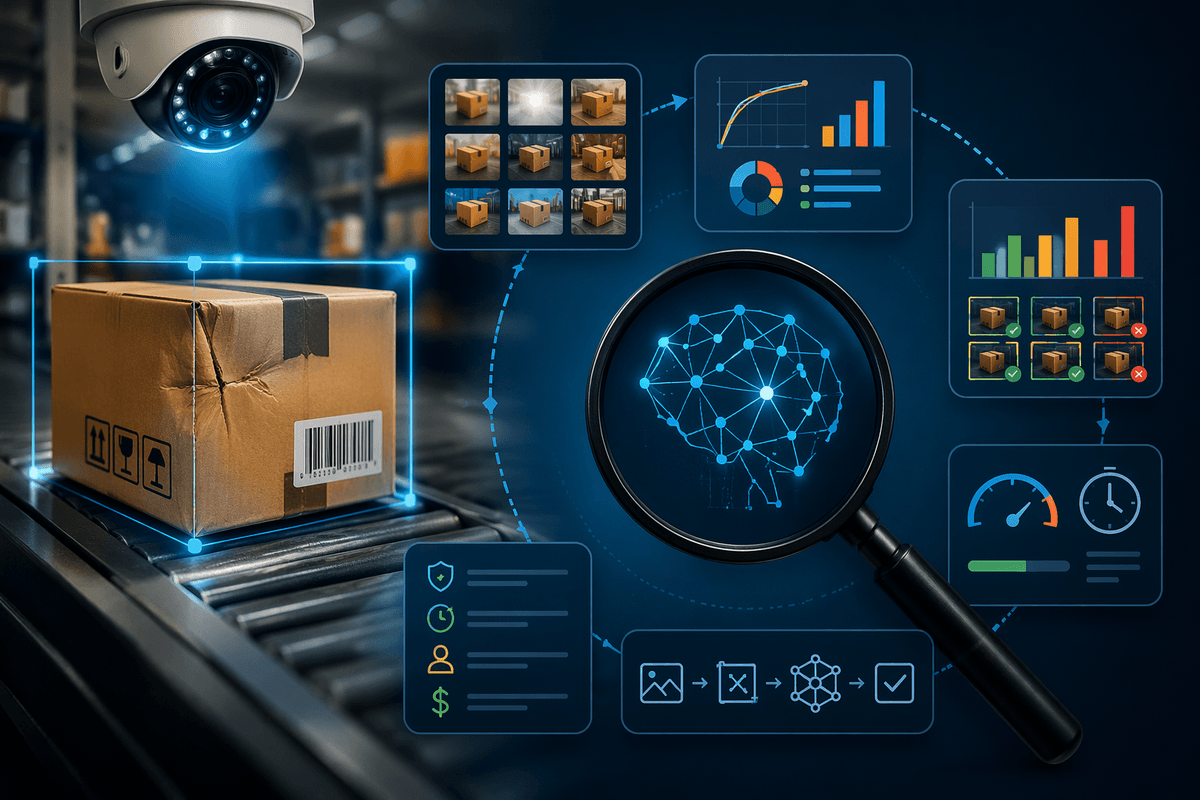
Think about a high-speed camera on a conveyor belt. It’s taking photos of thousands of glass bottles a minute, looking for a tiny crack. A human can’t write enough "if-then" rules to describe every possible way a bottle can break. So, we use a deep network. We feed it a million photos of broken glass and a million photos of perfect glass, and we let the math find the difference. It’s not "thinking" about the bottle. It’s finding a statistical signature in a sea of pixel values.
Tensors and the Initial Grind
The raw material here is the tensor. In the lab, people talk about tensors like they’re magic, but they’re just arrays of numbers. When a photo of that glass bottle hits the system, it gets stripped down. The red, green, and blue values of every pixel become a massive grid of numbers. That’s the input.
The data then hits the first "hidden" layer. This is where the friction starts. Every layer is just a bunch of math problems (weights) that the data has to pass through. The first layer usually looks for the easy stuff—harsh lines, edges, shadows. It passes its "notes" to the next layer, which looks for shapes. The deeper you go, the more complex the patterns get. By layer 50, the math is looking for textures that signify a structural crack.
The problem is the "compute" cost. Every time a number moves from one layer to the next, it’s a calculation. When you have a hundred layers and millions of parameters, your standard office PC is going to melt. You need GPUs—specialized chips that can do a thousand of these math problems at the exact same time. This isn't just a software project; it’s an industrial energy hog. If you don't have the hardware, your deep learning project is dead before you even start the first training run.
The Nightmare of Backpropagation
This is where it gets really annoying for anyone actually trying to build these things. When you start, your network is an idiot. All the weights are random. You show it a broken bottle, and the math says "It’s a dog."
To fix that, we use backpropagation. It’s the "undo" button for mistakes. The system calculates exactly how wrong it was—we call that the "loss"—and then it sends a signal backward through every single layer. It tells each connection, "Hey, you were a little bit off, shift your weight by 0.0001."
It sounds simple, but in a deep network, that signal can get lost. We call it a "vanishing gradient." By the time the error message travels back from layer 100 to layer 1, it’s so small that the first layers never actually learn anything. You end up with a model that can’t see the basic shapes because the feedback loop is broken. Engineers have to spend weeks just "tuning" the math to make sure the signal actually reaches the back of the line. It’s not magic; it’s just tedious, late-night debugging of calculus.
Why Scaling is a Total Headache
Everyone wants to build a "deep" model because they think more layers equal more smarts. But more layers usually just equal more problems. One of the biggest is latency.
Imagine you’re running a warehouse robot. It’s using a deep network to "see" where it’s going. If that model is 200 layers deep, it might take 200 milliseconds to process a single frame of video. That sounds fast, but if the robot is moving at three meters a second, it’s already hit a wall before the math tells it there was a wall there.
To fix this, we have to "quantize" the models. We basically dumb down the math. Instead of using super-precise numbers with ten decimal places, we round them off. It makes the model faster and lets it run on smaller, cheaper chips, but you lose accuracy. It’s a constant tug-of-war. Do you want the "genius" model that takes five seconds to think, or the "okay" model that reacts in real-time? In the real world, the fast, "okay" model usually wins.
The Black Box and the "Why" Problem
Here’s the part that keeps legal teams up at night: Interpretability. Since there are millions of weights shifting around in the dark, nobody actually knows why a deep network makes a specific call.
If a model flags a shipping container as "dangerous," and a human inspector opens it up and finds nothing, the inspector is going to ask, "Why did the computer say that?" And the engineer’s answer is usually, "The math just landed that way." That doesn't fly in a professional environment. We’re now seeing a massive push for things like "attention maps," which are basically tools that force the machine to highlight which pixels it was looking at when it made the decision. It’s an attempt to turn a "black box" into something we can actually audit. Without it, you’re just trusting a very expensive, very fast guessing machine.
Data Hunger and Overfitting
Final thing—you can't be lazy with your data. Deep networks are "hungry." If you give a simple model 1,000 examples, it might do okay. If you give a deep network 1,000 examples, it will just memorize them. We call this overfitting.
It’s like a student who memorizes the exact answers to a practice test but has no idea how to solve the actual math. The second you show that model a bottle in a different light or a slightly different angle, it fails. To make deep learning work, you need massive, diverse datasets. You need millions of examples. And someone has to label all that data. The "high-tech" future of deep learning is mostly built on the back of thousands of people sitting in rooms labeling images for pennies. It’s a massive, industrial-scale grind.
Conclusion
Look, at the end of the day, deep learning is just a really powerful, really high-maintenance tool. It’s not a brain; it’s a stack of filters. You don't just "set it and forget it." You spend your life monitoring for drift, fighting with the hardware, and trying to figure out why the weights shifted in a weird direction. It’s the most powerful calculator we’ve ever built, but it still needs a human to tell it which problems are actually worth solving and to make sure it doesn't hallucinate a solution that doesn't exist.