Why disinformation spreads faster than you can respond
You publish a correction at 9 a.m., and by lunchtime the false claim has already been screenshotted, reposted, and reframed across platforms. That speed comes from incentives and mechanics: emotionally charged content triggers quick sharing, algorithms reward early engagement, and copy-paste variants let a story survive even when the original post is removed.
Response is slower because verification takes time, and reputational stakes push careful wording. Meanwhile, disinformation actors can test dozens of headlines, images, and audiences at low cost until something “sticks.” Even a strong rebuttal competes with a fragmented attention span and with people who never see the correction.
AI can help close the gap, but it can’t eliminate it; the practical constraint is that faster detection usually increases false alarms, which then demands human review capacity.
Define the goal: detection, attribution, or response support
A communications team often jumps straight to “use AI to stop misinformation,” but that’s three different jobs. Detection means flagging likely false or manipulated items early so a person can review them. Attribution means estimating where a claim started, which accounts coordinated, and how it traveled—useful for investigations, but harder to do reliably and easy to overstate. Response support means helping you act: drafting a correction, prioritizing which rumors to address, or identifying who is most likely to see (or share) the update.
Picking the wrong goal creates preventable harm. A detection tool tuned for speed will surface more edge cases—satire, local slang, or legitimate breaking news—so using it for takedowns can look like censorship. Attribution models can wrongly “connect the dots,” especially when multiple communities repeat the same talking point independently. Response support can be effective even with uncertainty, but it requires clear guardrails: AI suggests and ranks; humans decide and publish.
Choose the signals: content, behavior, networks, and context

You can’t detect disinformation from “the text” alone any more than you can judge credibility from a headline. Content signals include phrasing patterns, reused images, synthetic artifacts, and similarity to known claim templates, but they fail when a falsehood is short, plausible, or newly emerging. Behavior signals look at how something is posted and amplified: sudden bursts, many accounts sharing within minutes, or repeated near-duplicates from the same small set of profiles.
Network signals add structure: which accounts regularly move together, which groups bridge platforms, and whether amplification routes look organic or choreographed. Context signals keep you from punishing normal life: disasters, sports finals, and local protests all produce rapid sharing and emotional language. Many organizations can see what’s published to them, but not cross-platform shares, private groups, or full follower graphs, so you often need a “good enough” mix of signals that works within your visibility and legal constraints.
Pick an AI approach that matches the failure modes
A newsroom Slack fills with flagged posts: some are obvious fakes, others are genuine breaking updates written in frantic, imperfect language. That’s the moment to match the model to what you’re afraid of getting wrong. If your main failure mode is “we missed the early wave,” use lightweight similarity and clustering to catch near-duplicates and claim templates fast, then route to review. If your failure mode is “we accused someone unfairly,” prioritize conservative classifiers and provenance checks (reverse-image lookups, watermark and metadata inspection, and source consistency) over confident-sounding labels.
Generative AI is best treated as an assistant, not a judge. Use it to summarize what a claim says, translate, extract entities, and draft response options with citations you can verify, not to decide truth. When you do use large language models for triage, constrain them: require them to point to observable signals (what matched, what changed, what accounts behaved unusually) and allow “uncertain” as a normal outcome.
More sensitive detectors mean more false positives and more staff time; more precise systems often require data you don’t have. The workable target is a tool that fails safely: it flags early, explains why, and makes it easy for a human to disagree.
Build a human-in-the-loop pipeline that scales

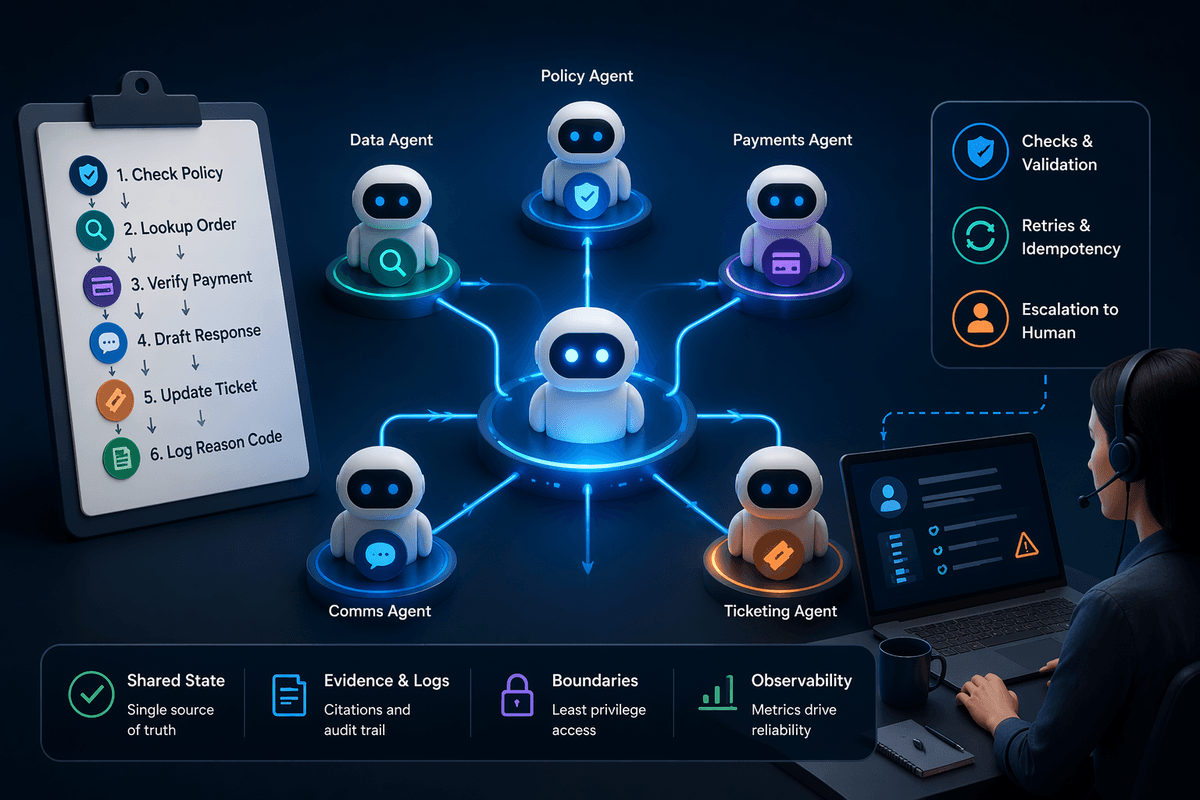
The flagged queue is only useful if someone can clear it before the rumor peaks. The scalable pattern is triage: a fast first pass groups near-duplicates, assigns a risk score, and routes items into lanes (e.g., “possible manipulated media,” “health claims,” “harassment”). Humans review the highest-risk lane first, while lower-risk items wait for more signals, like whether reputable accounts repeat the claim or whether the story changes across reposts.
Reviewers need tools that reduce cognitive load, not more alerts. Each item should come with the evidence the system used: the closest matches, the repost timeline, the key accounts that accelerated it, and what would falsify the claim. Simple controls matter: “merge into existing incident,” “mark as satire,” “needs reporting,” “respond now,” and “ignore.” Without consistent labels and feedback, the model won’t improve and staffing becomes guesswork.
Scaling also means budgeting for the messy parts. You’ll need coverage outside business hours, training for new reviewers, and periodic audits for systematic false positives against specific communities or dialects. More lanes and more nuance increase accuracy, but they also increase review time, so you have to decide what gets fast handling and what gets a slower, safer process.
Deploy responsibly: transparency, safety, and legal constraints
A post gets flagged, the team wants to act, and the fastest path is often the riskiest: silent downranking or removal without a record. Responsible deployment starts with transparency you can actually maintain—clear reasons codes (“manipulated media,” “impersonation,”), a visible appeals route, and an internal audit log that captures the model version, inputs used, and who approved the action. Without that paper trail, you can’t defend decisions to editors, the public, or regulators.
Safety is less about perfection than about limiting predictable harm. Put “do no damage” defaults into the product: quarantine to human review for high-impact topics, rate-limit repeat offenders instead of nuking edge cases, and require a second reviewer for actions that could endanger someone’s safety or credibility. Plan for adversaries copying your playbook; publish what you’re doing at a high level, but keep exact thresholds and detection rules changeable.
Privacy rules, labor policies, platform terms, and defamation risk all push you toward minimal data retention, purpose-limited use, and cautious language (“likely coordinated,” not “proven conspiracy”). The cost is operational: counsel review, documentation, and training slow deployment, but they also keep a “helpful” system from becoming a liability.
Measure impact without fooling yourself (or your stakeholders)
You roll out a new detector and the dashboard looks great: more flags, faster response times, fewer complaints. Those are activity metrics, not impact. Impact is whether fewer people believe, share, or act on the false claim, and whether your interventions reduced harm without suppressing legitimate speech. Track outcomes like downstream resharing after a label, reach of corrected posts in the same audiences, and the time a claim stays “unanswered.”
Avoid self-congratulation traps. If reviewers get stricter, precision can rise while you miss more real incidents; if you downrank aggressively, you may “solve” the chart by hiding the problem. Use holdouts when you can (a small slice with no intervention), compare against baseline weeks, and audit by topic and community so improvements aren’t concentrated where detection is easiest. The constraint is real: rigorous measurement costs time, data access, and sometimes uncomfortable results.